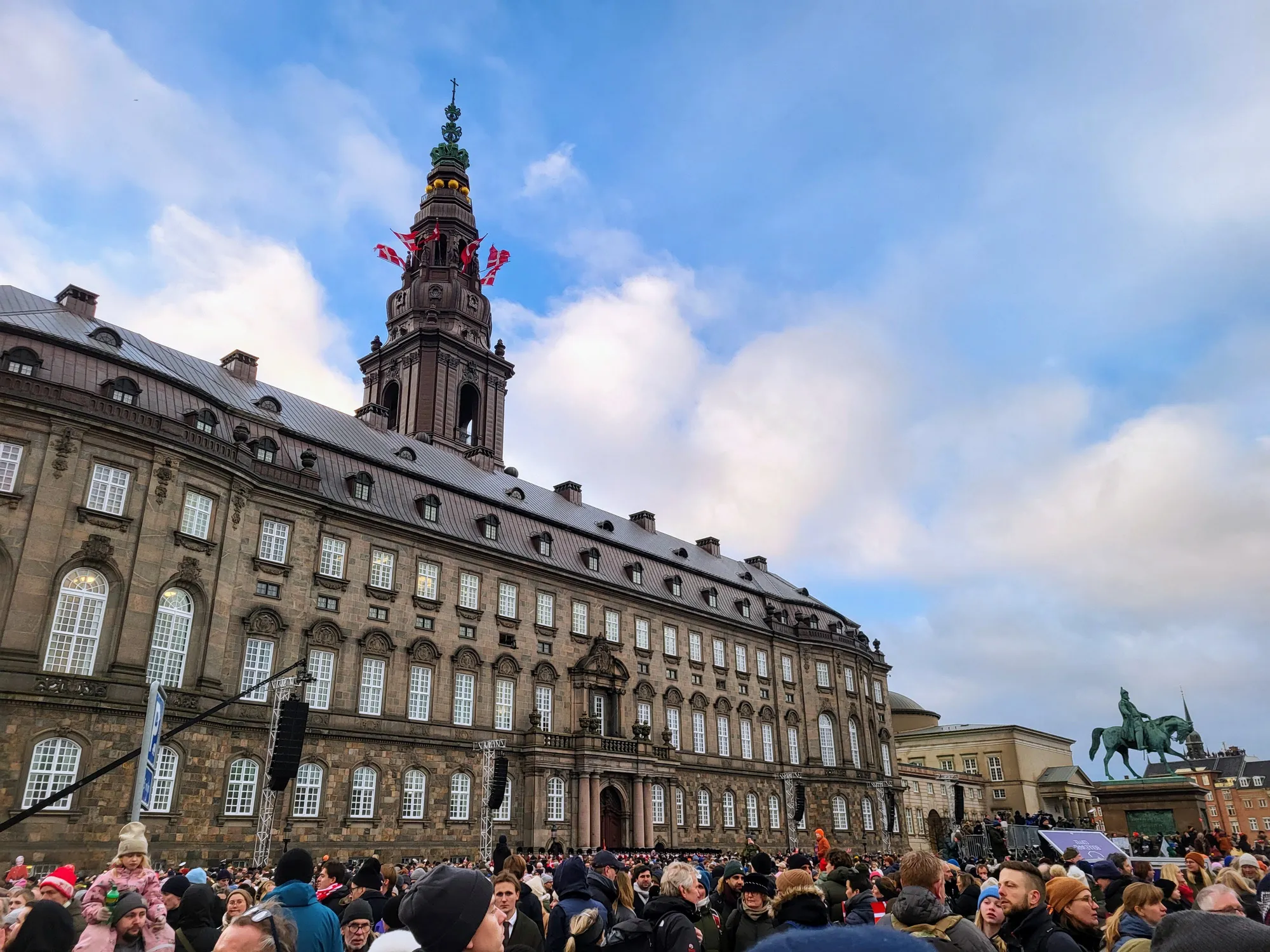
Insights about Danish citizenship: from debates in Parliament to population statistics
No alien shall be naturalized except by Statute: thus postulates the Danish constitution (Grundloven), first adopted in 1849, which was last updated in 1953. This means that in order to become a Danish citizen, one needs to be approved by the Danish Parliament (Folketinget). Acquiring Danish citizenship is therefore dependent on a political process in which a new citizenship bill undergoes several readings and a final vote, usually 1-2 times a year.
Immigration and integration are frequently discussed subjects in the public debate in Denmark, especially when elections are on the horizon, and discussions are sometimes marred by strong feelings related to whether or not existing legislation regarding foreigners works as intended and whether or not the requirements for becoming a Danish citizen are sufficiently strict.
In this analysis, we explore data from the last 22 years so as to better understand how the political part of the process has evolved, among others by looking at how much time the MPs have spent on the readings of the bills, how they have voted and which topics have been discussed in Parliament. In this connection, we also explore some general population statistics, including data on residence permits and newly acquired citizenships, as those are sometimes in focus during the debate in Parliament.
A little about the process of becoming a Danish citizen
The requirements for becoming a Danish citizen are determined by Parliament, which is also the institution responsible for the final approval of all applications. In order to make it thus far, one must live up to a whole lot of strict criteria as well as go through a comprehensive application process, where cases usually have a processing time of 2 years. The processing time has increased throughout the years as the criteria have been adjusted and the process has become more complex.
The individual applications are evaluated in a collaboration between the Ministry of Foreigners and Integration (UIM) and the Parliament’s Citizenship Standing Committee (Indfødsredsudvalget), which together verify whether the applicant fulfills all the requirements and in certain cases whether the applicant should be granted an exception from the rules. The final approval takes place twice a year and begins with the presentation of a new bill in Parliament, usually in April and October. The bill undergoes three readings before a final vote is due to either approve or reject the bill - the same procedure as with all other bills.
This process allows Parliament to remove certain people from the bill and thereby deny granting them Danish citizenship. For instance, this can happen when a person no longer fulfills the requirements or in case a political majority decides that certain person(s) do not deserve to become Danish - this is something we saw in connection with the so-called “right mindset” interviews in 2024-2025.
All 43 bills adopted despite growing unhappiness with the process among parties on the right wing
A total of 43 citizenship bills have been processed in Parliament between 2004-2025. All of them have been approved even though there have been disagreements in the Chamber (Folketingssalen) regarding whether or not all people whose names have been present in the bills ought to obtain Danish citizenship. Some applicants have been removed from the bills between the first and the third (final) reading.
Overall, the support for the bills has fallen from 85-100% in the years leading up to 2011 to about 71% in 2025. This is mostly due to a growing share of MPs voting “neither for nor against”, a kind of vote that has increased in popularity from less than 1% before 2015 up to 24% in 2025. On average, roughly 10% of MPs have voted “against” across all years. As Figure 1 shows, there has been some variation in terms of what voting has looked like from one year to the other, with larger changes happening prior to the political parties making new agreements about making the requirements tougher.
Figure 1. Share of votes by vote type throughout the years
Looking at the distribution of votes by party, we can see that the two biggest parties from both the left and the right wing - Socialdemokratiet (S) og Venstre (V) - have always voted “for”. The same applies to the remaining parties from the left wing, whereas the other parties on the right wing more often vote “against” or “neither for nor against” the citizenship bills. You can see the overall distribution of votes for each party in Figure 2 just below.
Figure 2. Distribution of votes by type and political party
It is worth noting that not all right-wing parties vote in the same way when it comes to the citizenship bills. For example, the Danish People’s Party (Dansk Folkeparti - DF) has used 71% of their votes on completely opposing the bills, while 84% of the votes of the Danish Democrats (Danmarks Demokraterne - DD) have been “neither for nor against”. However, in both cases, the consequence of their vote has been the same: an increased pressure on the remaining parties in Parliament as well as growing problems with legal uncertainty among the many applicants whose names appear on the bills. These people have already lived up to many strict criteria and have not committed any crimes.
You can see how each MP has voted on the citizenship bills in the interactive report that this article acts as a companion to. In there, you will also be able to find the names of the 23 politicians who have used every single opportunity they have had to vote against the bills, wishing to deny giving democratic rights to a whole lot of law-abiding residents.
Around 290 new speeches in Parliament each year, with certain parties dominating the debate despite their smaller size
There are plenty of opportunities for the MPs to provide input for the citizenship bills as those bills must by definition go through three readings in Parliament before the final vote can take place. During the readings, individual MPs as well as the Minister of Foreigners and Integration give speeches and ask each other questions. Sometimes, minor votes happen, where only certain parts of the bills are altered. In the case of the citizenship bills, such changes are typically related to removing people who no longer fulfill the requirements from the bill. These minor votes, as well as any talks happening besides closed doors or outside of the Chamber, are not included in this analysis.
Since 2004, a total of 6,300 speeches have been made during the readings of the citizenship bills in the Chamber. This number includes both political speeches and purely procedural statements. On average, members of the various parties give around 290 speeches every year. As Figure 3 below indicates, there has been a lot of variation throughout time: for instance, in 2024, a total of 1,116 speeches were made, which is 3.8 times higher than the annual average.
Figure 3. Number of speeches given during the readings throughout time
The average length of each debate (reading) has been 35 minutes, again with significant variation between different years. In 2025, for instance, a reading took nearly 2 hours (112 minutes), compared to mere 8 minutes back in 2014.
Taking a look at Figure 4, which shows how much each party engages in the debate, we can see that the Social Democrats (Socialdemokratiet - S), the Danish People’s Party (DF) and the Liberals (Venstre - V) account for more than half of the conversation (55.6% of the discussion in the Chamber).
Figure 4. The extent to which each party engages in the debate in the Chamber
Here, the Danish People’s party (DF) differs from the other two parties in that it accounts for a disproportionate part of the debate relative to the party’s overall size. For example, in 2017, politicians from DF accounted for 20.7% of Parliament, while their speeches during the readings of the citizenship bills took up 54.3% of the debate (a 1.6 times overrepresentation, as shown in Figure 5). Moreover, DF accounted for 12% of the debate in 2025, while only holding 3.9% of the seats in Parliament (a 2.1 times overrepresentation).
Figure 5. Representation of the political parties in the citizenship bills debate and in Parliament
It is not just right-wing parties that can be overrepresented in the debate. The Socialist People’s Party (Socialistisk Folkeparti - SF) has also been more engaged in the conversation relative to the number of MPs they have had, for example in 2014 (where they have a 1.5 times overrepresentation in the debate) and in 2019 (where their overrepresentation in the debate was 1.8 times). Even so, when looking at the composition of Parliament throughout the years, the Danish People’s Party (DF) is the only party that is consistently overrepresented in the debate.
Concerns about integration, crime and talks about tightening the requirements among the hottest topics in the debate
43 citizenship bills, 129 bill readings, 6,300+ speeches given by more than 200 different MPs over the course of 22 years: this is a rather large volume of data to analyse manually. Therefore, I applied a semi-automated approach in order to understand what the discussion has centered around without having to read thousands of speeches.
I recommend reading the appendix to those who are interested in the technicalities, but for the rest of us, the topic analysis was made by combining a traditional LDA model (used to group the speeches into different topics) and an AI model (used to convert the topics into something that can be understood by humans). The LDA model resulted in a total of 19 topics, which I have grouped further into fewer, more general topics, thereby making the output easier to understand. In the end, the analysis has focused on six overall topics spanning across the entirety of the data.
It is perhaps unsurprising that some of the most discussed topics in the debate are related to concerns about insufficient integration and hypothesized crimes committed by some of the applicants, as well as talks about making the already stringent requirements even stricter. Together, these negative topics account for 68% of the debate in the Chamber, as shown by Figure 6. In addition, there are some speeches which can be classified as either pure procedural statements or as politicians throwing accusations at their rivals, for instance for not living up to previous commitments related to making the requirements for application even more rigorous. Such statements account for 23.7% of the debate.
Figure 6. Number of speeches by overall topic
These findings are corroborated when doing a simple count of how often different words or combinations of words are mentioned in the individual speeches. As Figure 7 illustrates, the frequency with which words such as difficult (svær) and criminal (kriminel) increased dramatically in 2024, with the two words being mentioned 389 and 273 times respectively. Although the overall sentiment score of the speeches has also been negative during the last decade, a decrease in negativity is seen compared to the period 2005-2015.
Figure 7. Number of times certain words get mentioned in the debate
The only positive topic discussed in the debate has been about how obtaining Danish citizenship encourages integration and can be a reward for the applicant’s contribution to society. Unfortunately, there are not many politicians who focus on this aspect of citizenship acquisition and therefore, this topic only accounts for 7.8% of the total length of the debate in the years since 2004, as Figure 8 illustrates.
Figure 8. Share of the debate by overall topic (measured in minutes)
In general, the citizenship debate in Denmark is characterised by negative topics such as crime and problems with integration. At the same time, there is no recognition of the net positive impact that foreigners have on the Danish economy.
All in all, the parliamentary debate surrounding obtaining Danish citizenship has been predominantly negative, with a large emphasis on problems with integration and crime and with little to no focus on the fact that foreigners have a net positive contribution to Danish society (for example, data from 2024 shows that foreign citizens residing in Denmark accounted for 12% of the combined value generated in the country).
Population and immigration statistics in the context of the citizenship bills
Whereas the debate in Parliament appears to be driven a lot by feelings and personal convictions, it is possible to derive some unbiased insights when putting the spotlight on the official population and immigration statistics. Some of this data goes all the way back to 1980, however, we only look at data from 2004 onwards so as to stay within the same time frame as our analysis of what has happened in the debate in Parliament.
As Figure 9 shows, Denmark’s combined population has grown by 11% since 2004, and as of the 1st of January 2025, there were just over 6 million people living in the country. Meanwhile, around 1,5 million residence permits have been given and a bit over 128.600 foreigners have acquired Danish citizenship. Here, we can draw a rough conclusion that there is a ratio lower than 1:10 between the number of new citizens Denmark gets and the number of residence permits it gives.
Figure 9. Indexed developments in Denmark's total population and select immigration statistics (2004=100)
It is also worth noting that the share of residents without Danish nationality has doubled in the years between 2004-2024 (there has been an increase from 5% back in 2024 to 11.3% in 2025). This has multiple consequences, one of which is that we are now in a situation where about 1 in 10 people residing in Denmark has no right to vote in parliamentary elections, compared to 1 out of 49 residents back in 1980. Does leaving such a large share of people without any nation-wide political influence have any implications for Danish democracy? This is not a question to be answered by population statistics alone, but we already know that many foreigners do not even vote when they have the right to do so, for instance during the local elections - something they do partly because they feel excluded by the established political parties.
As previously mentioned, a large share of the citizenship debate in Parliament focuses on problems with integration, cultural differences and potentially insufficient contribution to Danish society. Here, immigration statistics can help shed some light on the latter point: 74% of all residence permits given between 2004-2024 have been associated with either work or study. Despite a lot of talk about an excessive intake of refugees, only 7.2% of all residence permits in this period are related to asylum and an additional 12.5% are related to family reunification.
Another frequent point of discussion in the debate is the origin countries of immigrants. In this relation, it is interesting to see that between 2004-2024, more than half of all residence permits were given to people from non-EU/EEA countries (about 56%), where the requirements for obtaining a residence permit are significantly more demanding.
In the same period, only 9% of all residence permits have been given to people from the so-called MENAPT countries (MENAPT is a uniquely Danish classification that includes Middle Eastern countries - with the exception of Israel - as well as countries from North Africa, Pakistan and Türkiye). This is well illustrated in Figure 10.
Figure 10. Number of residence permits given between 2004-2024 by region of origin
Moreover, during the last decade, there has also been a decrease in the number of people from MENAPT countries who have acquired Danish citizenship. While 71% of those who became Danish back in 2014 were originally from a MENAPT country, the corresponding number for 2024 was as low as 24%. Meanwhile, the share of new Danish citizens hailing from Nordic or other Western countries has jumped from 7.2% in 2004 to 38.6% in 2024. These trends are made evident by Figure 11.
Figure 11. Acquired citizenships over time by region of origin
For a very long time, the Danish government as well as many MPs in Parliament have dreamed about fewer people from MENAPT countries obtaining a residence permit/citizenship in Denmark. It looks like this dream has already come true for them.
Interactive report with more insights on Danish citizenship
The findings presented in this article are just a fraction of the insights that can be gained by examining the associated Power BI report. In there, you can find data on both the parliamentary debates and votes related to the citizenship bills as well as related population and immigration statistics. As a user, you are also able to use various filters in the report so that you can only focus on the data you find most relevant to look at.
This report is the first such collection of data that makes it possible to easily see what individual MPs and their parties have said in the course of the debate as well as how each politician has voted on the citizenship bills processed throughout the years. For those who have become Danish citizens via naturalization, the report can furthermore act as an important source of information on whom (not) to vote for during the next parliamentary election.
Conclusion
From numerous debates characterized by long speeches and feelings to unbiased population and immigration statistics: in this analysis, we have explored how the conversation around Danish citizenship in the Danish Parliament has evolved over the course of the last two decades. In addition, we have also seen how the changes the MPs have made to the naturalization process are already having an impact on the distribution of given residence permits and newly acquired citizenships.
The purpose of this investigation has primarily been to organize data on Danish citizenship and make it more accessible for the public. Compared to other readings on this subject, this article and the associated interactive report are founded on data that goes beyond general population figures and the number of residence permits given. By transforming text-based information and data encoded in an HTML format on the Danish Parliament’s website, it has been possible to follow the parliamentary process surrounding the acquisition of Danish citizenship.
Thanks to this new data, it has been possible to ascertain that the citizenship debate in Parliament has focused primarily on negative topics such as problems with integration and crime, and that there has been an ever-present desire from the parties on the political centre and the right wing to make the requirements for becoming Danish even more stringent. We have also seen that the Danish People’s Party (DF) has dominated the debate, with their statements accounting for a significant share of the conversation relative to the number of seats they have held in Parliament. Additionally, we have learned that there have been multiple MPs who have systematically voted “against” all citizenship bills they have been able to vote on.
This negativity is also reflected in the hard numbers. The parliamentary support for the citizenship bills has fallen from 85-100% in the years prior to 2011 down to about 71% in 2025, and the share of people who reside in Denmark without any influence on who gets to sit at Christiansborg and make decisions about their lives has doubled between 2004-2025.
With all of this in mind, we can expect that the upcoming parliamentary elections in 2026 will once again provide fertile ground for heated discussions related to Danish citizenship, with potential further tightening of the rules for those who wish to become full-fledged members of Danish society.
In any case, I will continue to follow the debate with a lot of interest, and I intend to update the Power BI report associated with this article on an annual basis.
Appendix: Data and method
Data collection and cleaning
In this article, we have read insights based on data originally from the website of the Danish Parliament as well as from Statistics Denmark (DST)‘s data bank. The data from DST is collected as Excel files and is subjected to very limited clean-up, as opposed to the data from the Parliament’s website, which have been manually sourced as HTML files and which have been transformed using BeautifulSoup. This is a Python package that helps to convert text into structured data, making it possible to aggregate the data and visualize it using charts etc. No automated web scraping has been done to the Parliament’s official website.
The data on the final votes in Parliament are presented largely as-is, though for MPs who have hopped between different political parties are shown under their last political party.
There are two reasons behind why the data from Parliament only goes back to 2004. First, Parliament’s data on the years prior to 2004 is only available in their archive, where it is stored in a very different format. Second, these data are likely quite outdated in relation to the current debate around Danish citizenship.
Sentiment scores
In addition, the numerous speeches from the MPs have been used in text analytics, including classic methods such as simple word counts and calculation of sentiment score as well as summarizing all speeches made by different MPs and their political parties.
The sentiment scores have been computed using a transformer model from Hugging Face (alexandrainst/da-sentiment-base), which is especially tailored towards analyzing speech in the Danish language. This model can classify any text as being either primarily positively or negatively loaded based on the individual words as well as the combinations of words used in the text.
Speech summaries
The summaries of the individual speeches are made using the large language model (LLM) known as
gpt-4o-mini, which has been called programmatically via OpenAI’s API. In this connection, it is important to note that some mistakes may occur, even though the model has been explicitly prompted to only refer to the information present in each individual speech. However, a manual check of the summaries that I performed showed that the essence of the speeches was captured quite well in the summaries.
Topic modelling
Finally, a topic modelling was carried out based on the summarised speeches. This was implemented through the application of a traditional LDA model, which was able to classify all 6.000+ speeches into up to 20 different topics. Following this, the top 20% most accurately classified speeches within each subject were sent to OpenAI’s language model in order to convert the automatically defined topics into something human-readable. The LLM’s suggestions were then evaluated manually, and were further grouped into more overall topics using qualitative methods.
📊🦉 Explore the free interactive report that serves as a companion to this article here.
🔎📈 Explore the Python code used to clean and structure the data used in the analysis on the project’s GitHub page.
Cover image source: Own production